Over the last couple of months, we’ve published data reporting on our commitments to paying a living wage and to offering pay-what-you-can tickets. For the third installment of this report-out, we’re sharing data on anti-racism.
We chose to do this reporting based on demands from #WeSeeYouWhiteAmericanTheatre. Those demands read:
- Publish an organizational budget showing how dollars are allocated.
- Publish total dollars earned by white artists and staff in a season versus total dollars earned by BIPOC artists and staff, according to titles and positions.
Given the size and type of organization, and a desire to dig into this data intersectionality (looking at gender, ability/disability, and class alongside gender), we adapted these demands to create the following data visualizations.
We chose not break down the data by titles and positions, but rather by arts workers v staff. We intuited that this demand applied most appropriately to a larger theatre with many departments (for example, it is seeking to ascertain whether a white Director of Marketing is being paid more than a BIPOC Director of Development). Given that both staff and actors have 100% pay equality, the only places where there is more flexibility around pay rates is designers and contractors (and we had a very small sample size of recipients in those categories). We have published information about rates for all of these positions in our “Living Wage” report-out. See our “next steps” section for more information about future commitments around equity in designer stipends.
Our goal in this process is both to report transparently about how we are living up to our values, create benchmarks from which to grow, and update our specific goals and commitments around anti-racism.
How did we collect this data?
To collect this data, we sent a survey to everyone who worked with us from 2023-2024. We compiled this with internal data. The survey asked recipients to tell us what we paid them in 2023 and 2024, how they identify in terms of race and gender, how they identify in terms of disability, and qualitative responses about their class experiences.
Our data includes 32 people out of 39 who worked with us between 2023 and 2024. For this reason, this data is deeply imperfect: even one more response could skew this data by thousands or tens of thousands of dollars. Further, it is a very small sample size, which limited the ways we could splice the data (for example, if we tried to create a visualization representing the intersection of race and disability, certain categories would include only one or two respondents). We are choosing to publish this data despite its imperfection while making commitments to how we will better collect data in the future.
We are using the category of “arts workers” as opposed to “artists” to give a clearer sense of who is being paid to work on the actual productions. We include in this category actors, designers, stage managers, production managers, carpenters, electricians, box office staff, graphic designers, and videographers. We are counting staff separately (and in the one case where a staff member also worked on a production, we counted their stipends separately in each category).
Total Dollars Paid
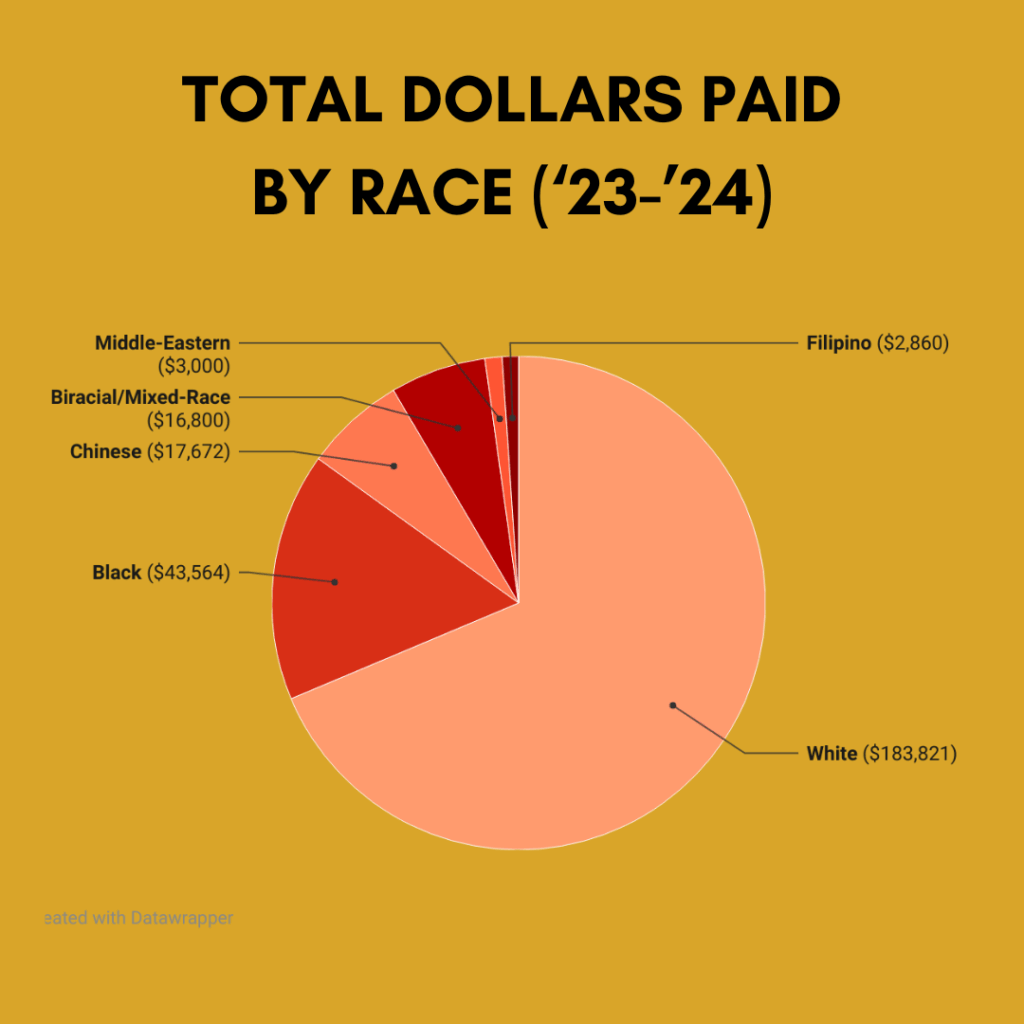
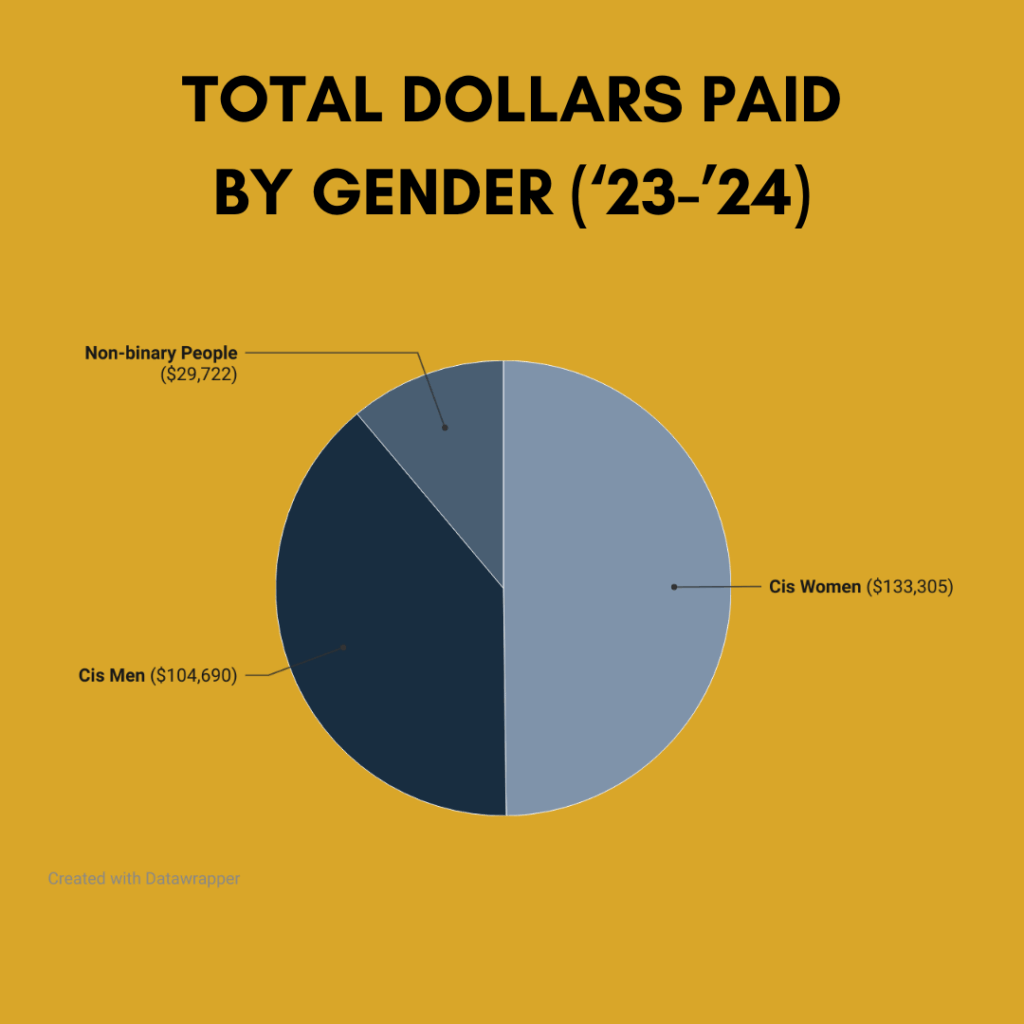
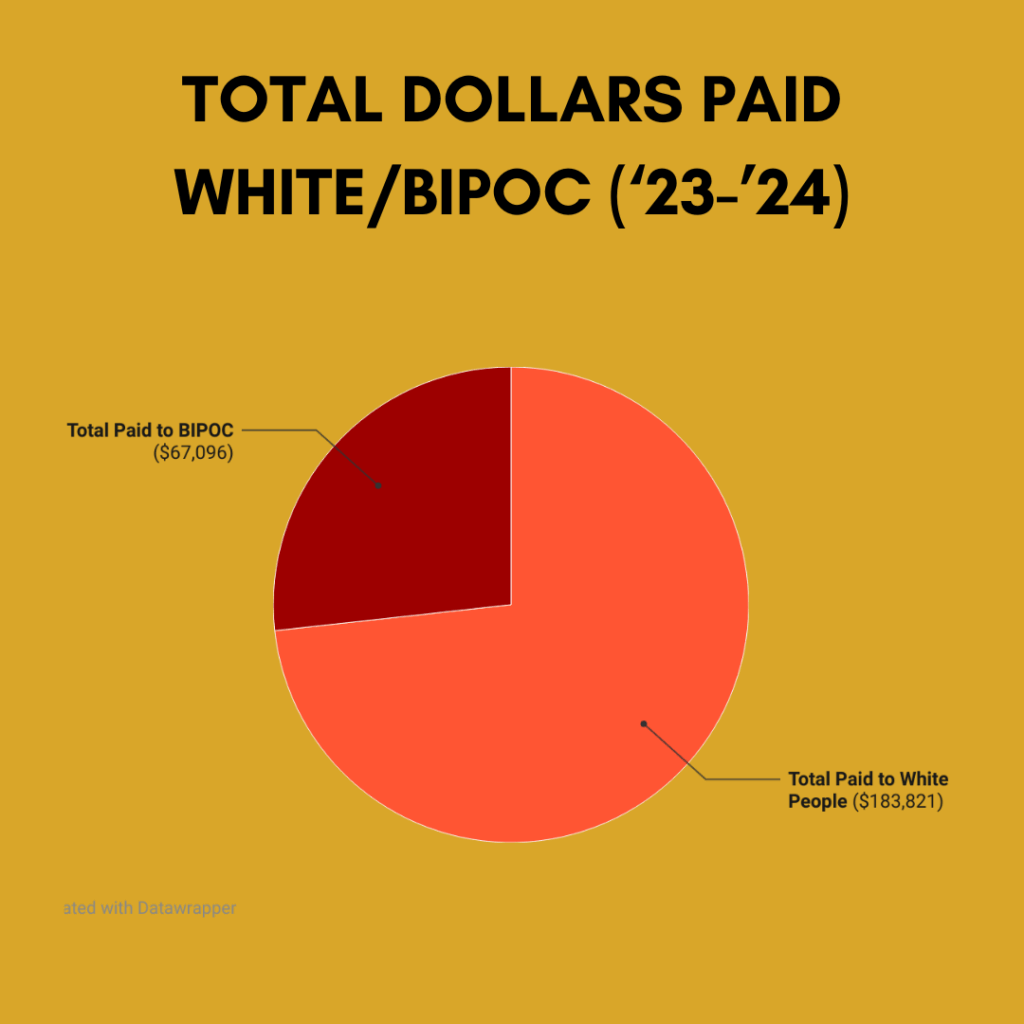
Total Dollars Paid Broken Down by Both Race and Gender
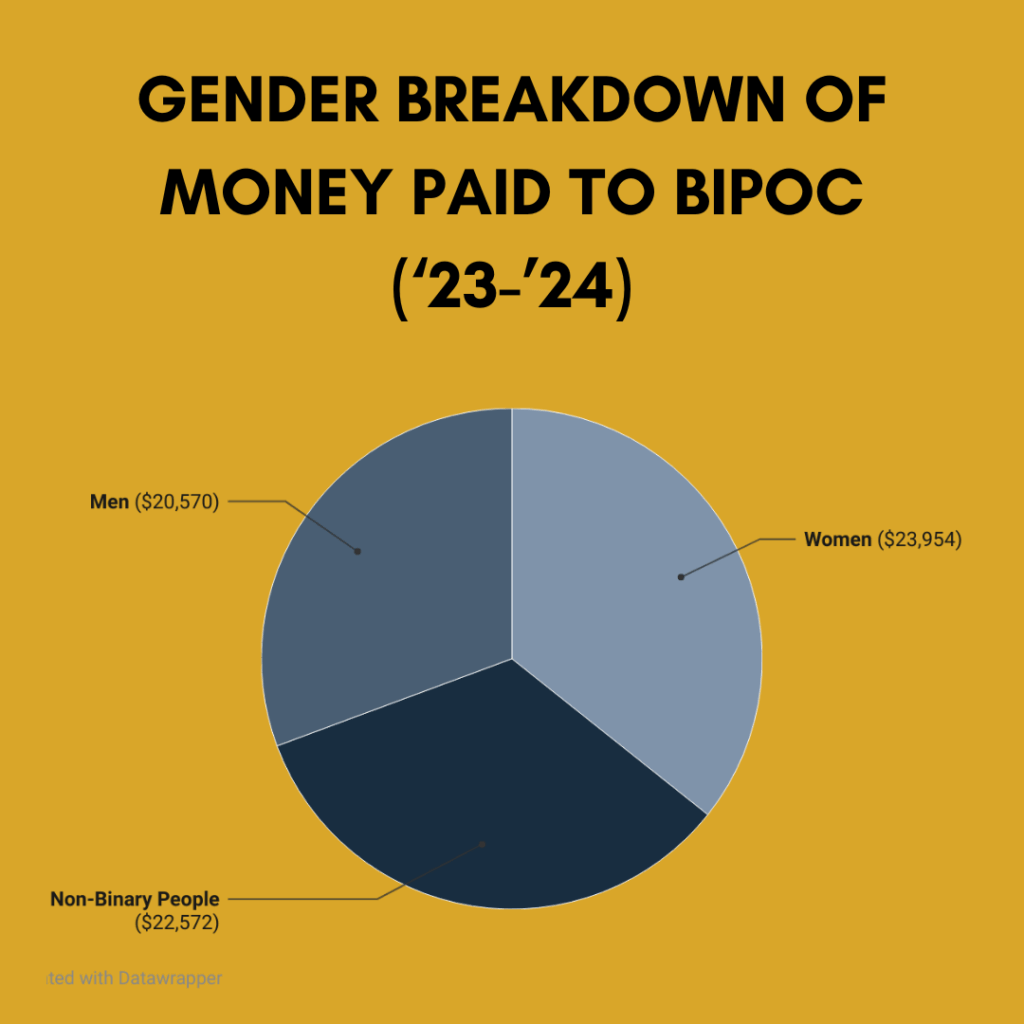
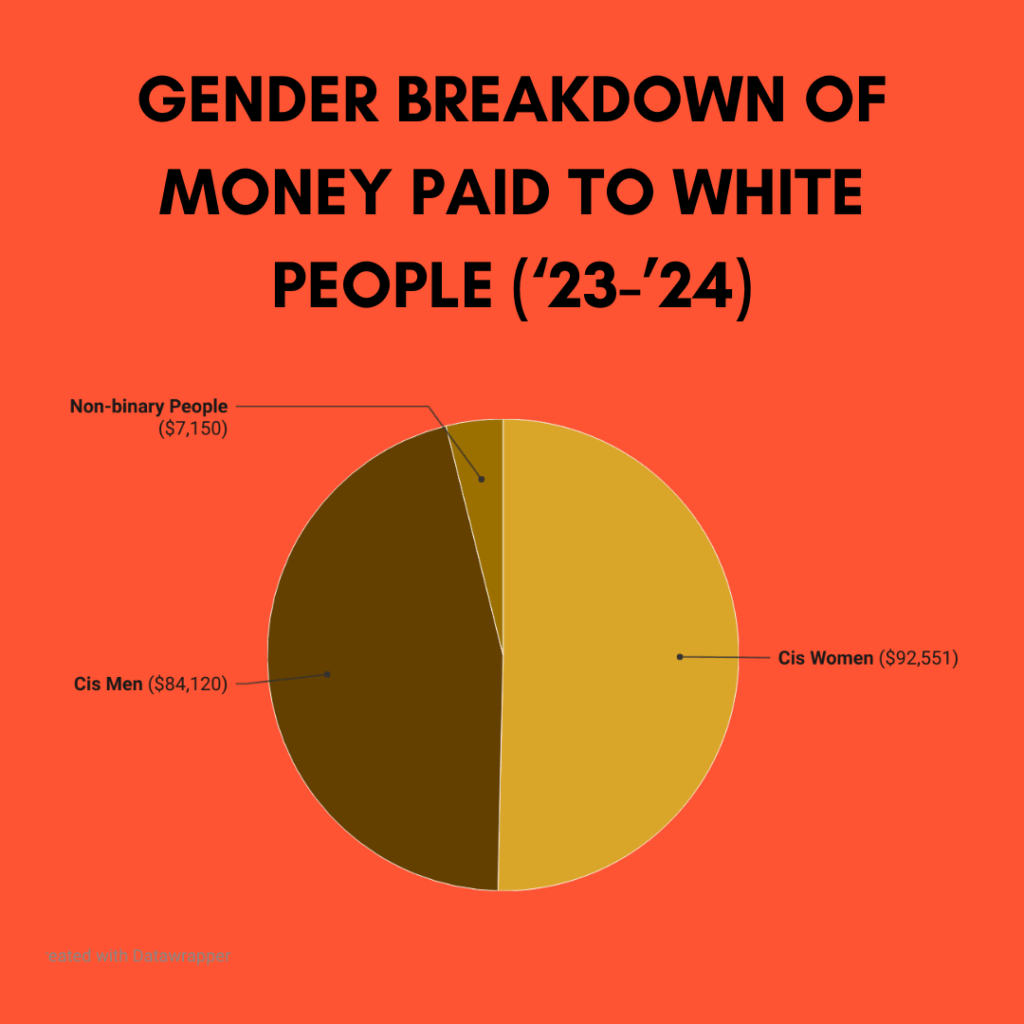
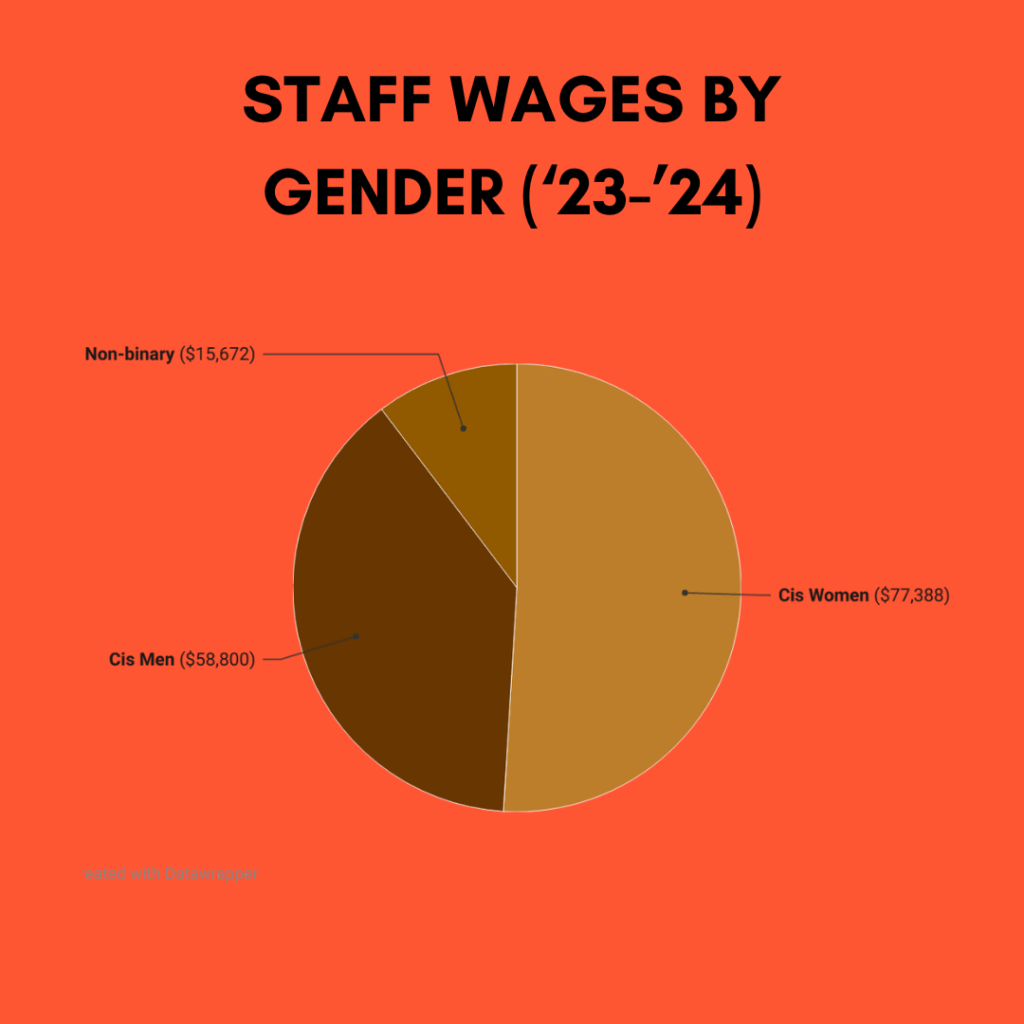
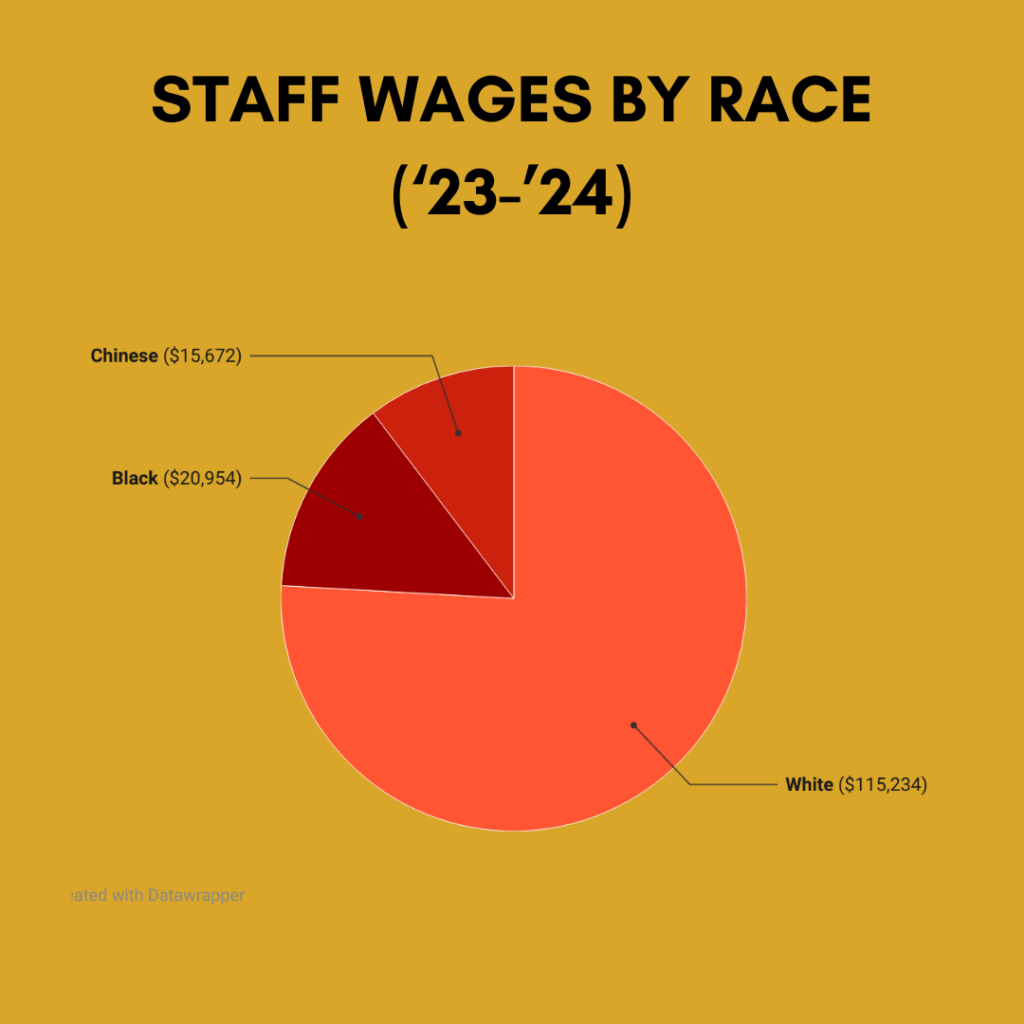
Staff Wages by Race and Gender
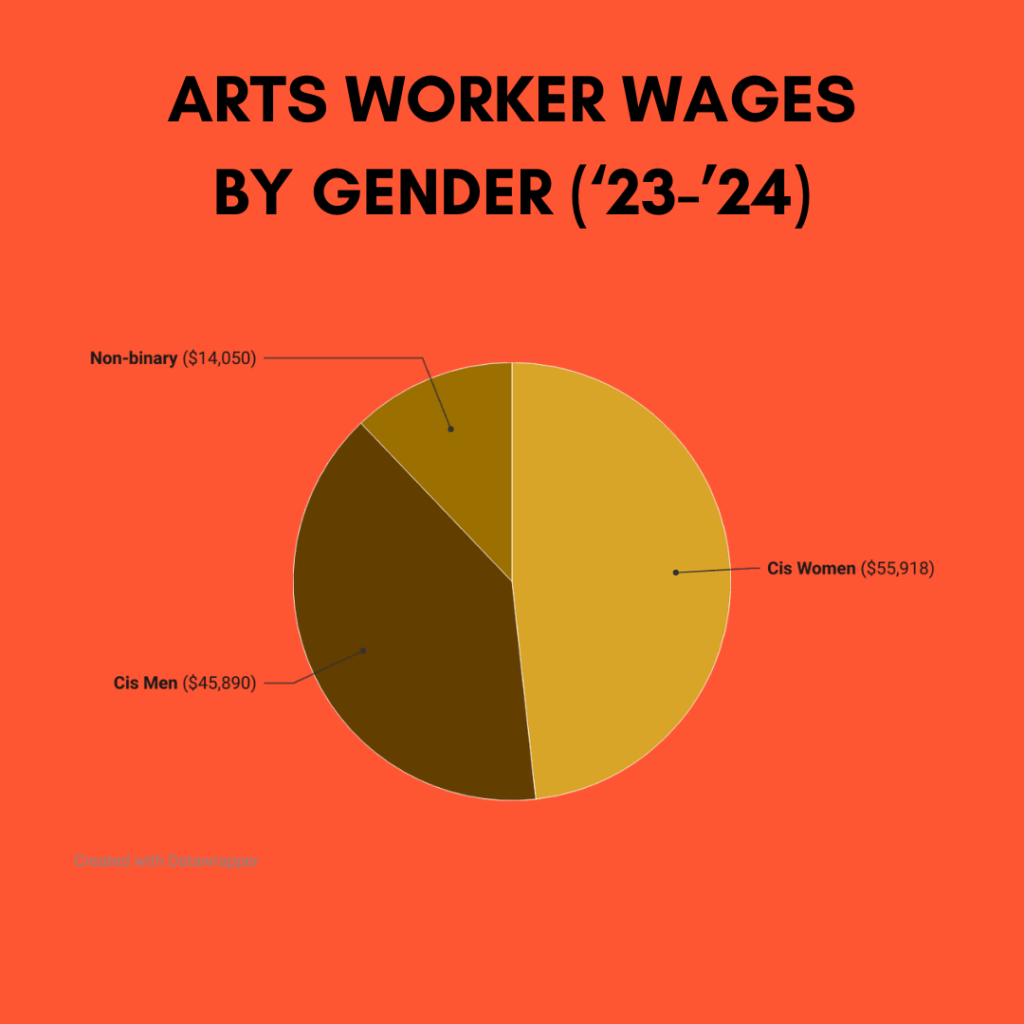
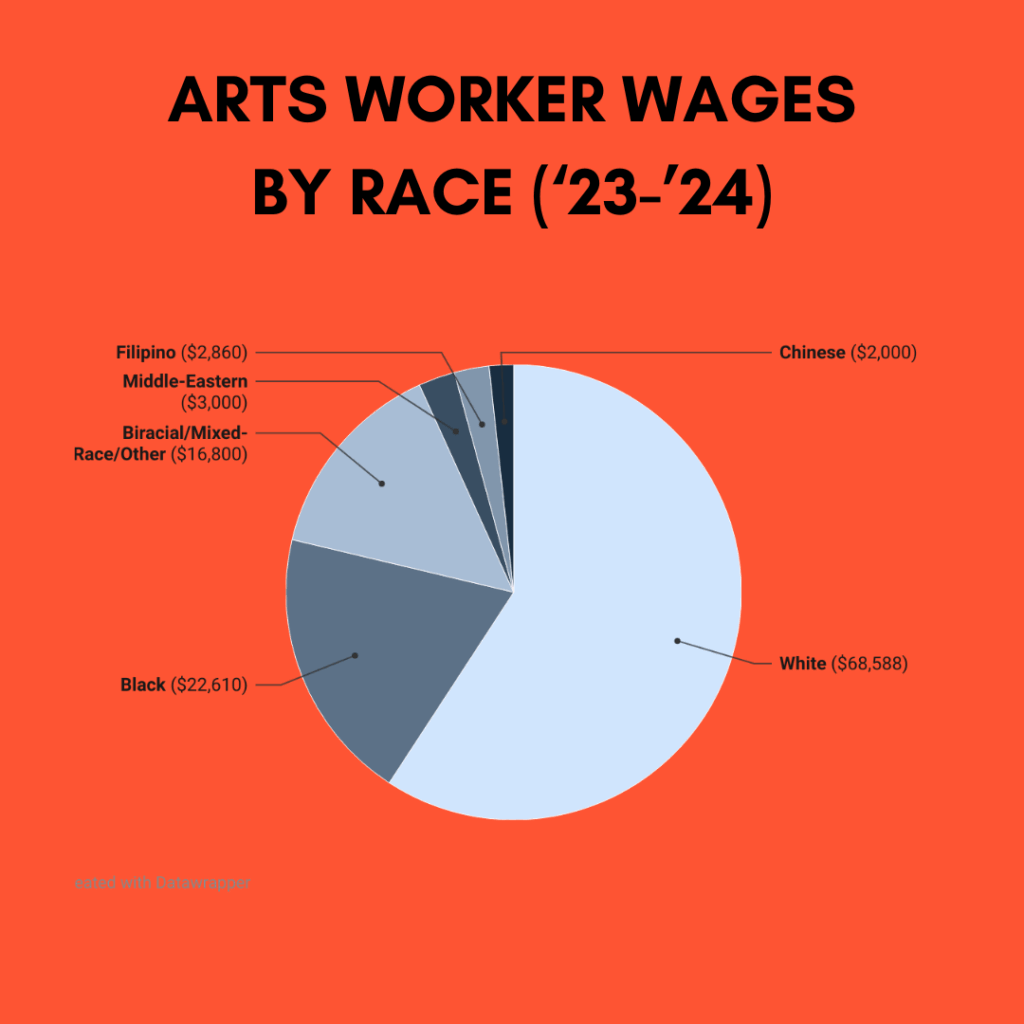
Arts Worker Wages by Race and Gender
Reflections
Several years ago, The Feast (then The Williams Project) made a commitment to casts being at least 50% women and non-binary folks, and at least 50% BIPOC people within a season. Looking back on that commitment in the light of these numbers, we have the following questions and conclusions:
- Since we stopped producing “seasons” and moved to a project-based producing model, we didn’t adapt our method of accountability around gender and racial equality within casts. This means that within ‘23 and ‘24 we did not meet our commitment to 50% BIPOC actors onstage.
- Our commitments to equal racial representation onstage and wage equity amongst actors and staff—while both important—do not do enough to create racial equity economically within our organization.
- Because we only have three staff members, and only two of them worked the entirety of 2024, staff salaries is the category where the largest percentage and dollars of wages are currently going to white people. When expanding our staff in the future, we acknowledge that prioritizing seeking out BIPOC candidates is crucial and will commit to that priority.
- As we’ve gotten larger, the number of arts workers we hire quickly (or people who hire each other) has grown exponentially. This means we’re moving less intentionally, and our HR capacity hasn’t grown alongside the scale of the company. We’re relying more heavily on the (whiter) status quo systems for hiring instead of pushing against them.
- Around gender, where across categories most of our resources are going to cis-women and non-binary people, Artistic Director Ryan Purcell said that he was “neither bothered by nor proud” of these results. Other than around onstage representation, we have not put any conscious work into gender equity in our organization. While these numbers point to economic equity in the macro sense, we are curious to dig deeper into areas where gender inequality and patriarchy remain within the organization. In particular:
- Despite economic gender equality, where are there inequalities of power?
- What are the places where gender inequality is lurking within the organization? In particular, we’re interested in collecting more data and creating clearer policies around design stipends to make sure we are paying equitably in that area.
Commitments
Between now and the end of 2026, we commit to commissioning a work from a BIPOC lead creative team to become part of our long-term repertoire.
Engage in an internal discussion around commitments for design stipends.
We will collect this data again at the beginning of 2027, to compare ‘25-’26 to ‘23-’24. Some things we plan to do differently next time:
- Provide this (optional) survey when we hire people, under the assumption that we will get a higher response rate than doing so after the fact.
- In order to honor the identities and experiences of our survey respondents, in addition to asking them to self-identify racially, we will ask them (optionally) to answer “Do you identify as BIPOC?” (We ran into the uncomfortable experience of trying to decide how to categorize people who identified as “mixed-race” or “other”).